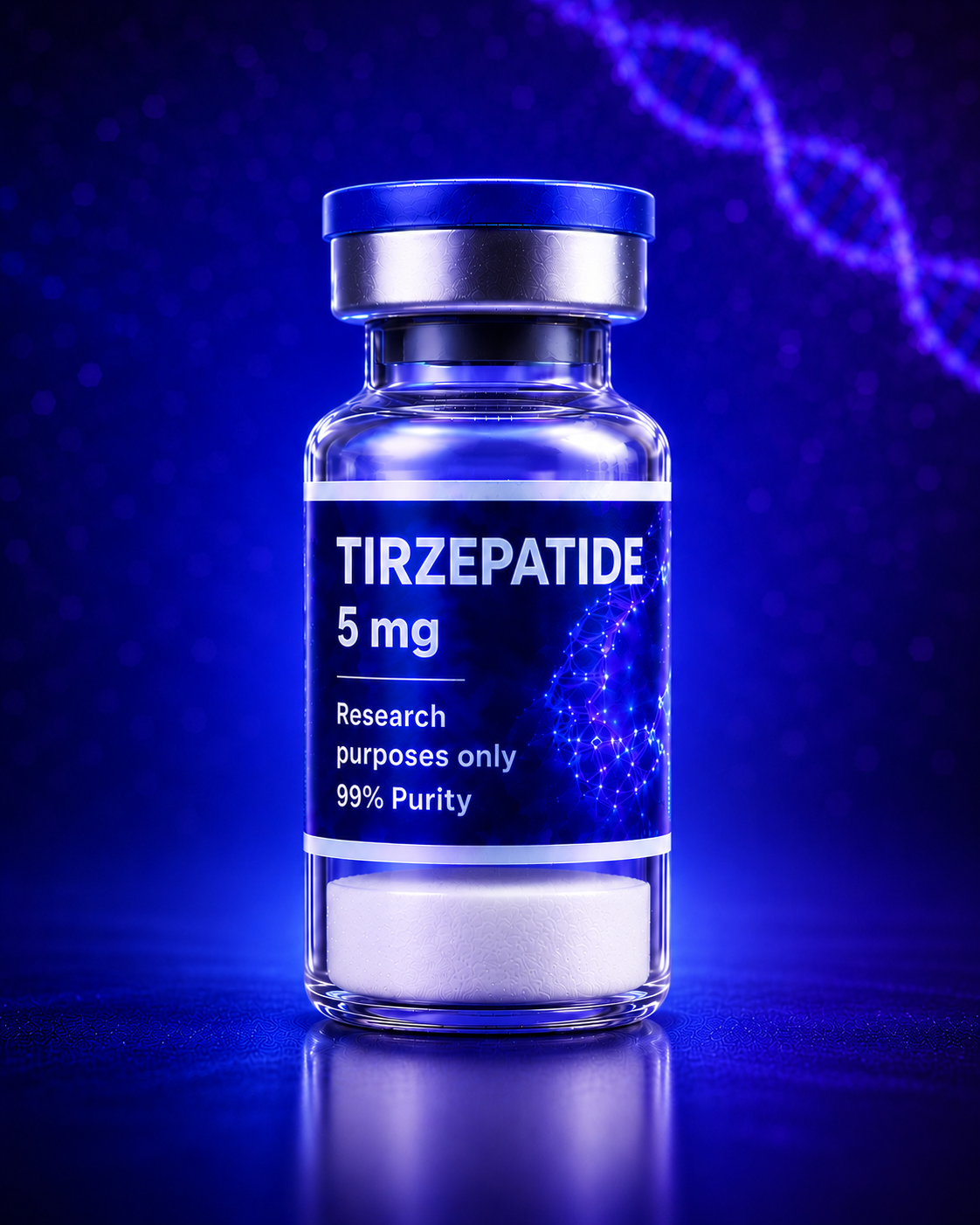
Tirzepatide is a synthetic peptide studied for its role in supporting metabolic function through dual hormone receptor activity. It is commonly explored in research focused on appetite regulation, glucose metabolism, and body composition.
This compound is known for targeting both GLP-1 and GIP receptors, making it a unique option in metabolic research protocols.
What it’s used for (research context):
Appetite regulation
Supporting healthy glucose metabolism
Body composition and fat loss research
Metabolic efficiency
How it works:
Tirzepatide acts on two key pathways:
GLP-1 receptor → supports appetite control and slows gastric emptying
GIP receptor → supports insulin response and metabolic regulation
By targeting both pathways, it is studied for its enhanced metabolic effects compared to single-pathway compounds.
Key features:
Dual-action peptide (GLP-1 + GIP)
Long-acting profile
Once-weekly research protocols
Non-stimulant mechanism
Research interest includes:
Fat loss and body composition
Appetite and hunger signalling
Blood glucose regulation
Long-term metabolic support
Why Tirzepatide:
Tirzepatide is often explored as a next-generation compound in metabolic research due to its dual-receptor activity, offering a more comprehensive approach to appetite and metabolic regulation.
Additional notes:
Not a stimulant
Long half-life supports weekly dosing
Gradual dose increases are commonly explored for tolerance




Reviews
There are no reviews yet.